
What is the EMS Compact?
The United States EMS Compact in plain terms: what it is, who it covers, and how it works.
The United States EMS Compact facilitates the day-to-day movement of EMS clinicians across state boundaries while they perform their official duties. An EMS clinician licensed in at least one participating state is granted a Privilege to Practice in other participating states.
The Compact is a state law that functions as a contractual agreement among states. It is enacted through legislation, and it has been enacted in 28 states and is operational in 27. A participating state is one that has passed the Recognition of EMS Personnel Licensure Interstate Compact (REPLICA), which establishes the legal framework for multistate practice and mutual recognition of EMS licensure. The Compact is authorized under the Compact Clause of the U.S. Constitution (Article I, Section 10, Clause 3).
The Compact:
- Increases access to patient care
- Protects the public
- Reduces administrative burden for EMS clinicians and states
- Enhances the Emergency Medical Services system in the United States
At a glance: The United States EMS Compact allows licensed EMS clinicians to provide care across participating states, for an unlimited time, with no additional application or fee, supporting workforce readiness, disaster response, and public protection nationwide.
The Three Components of the EMS Compact
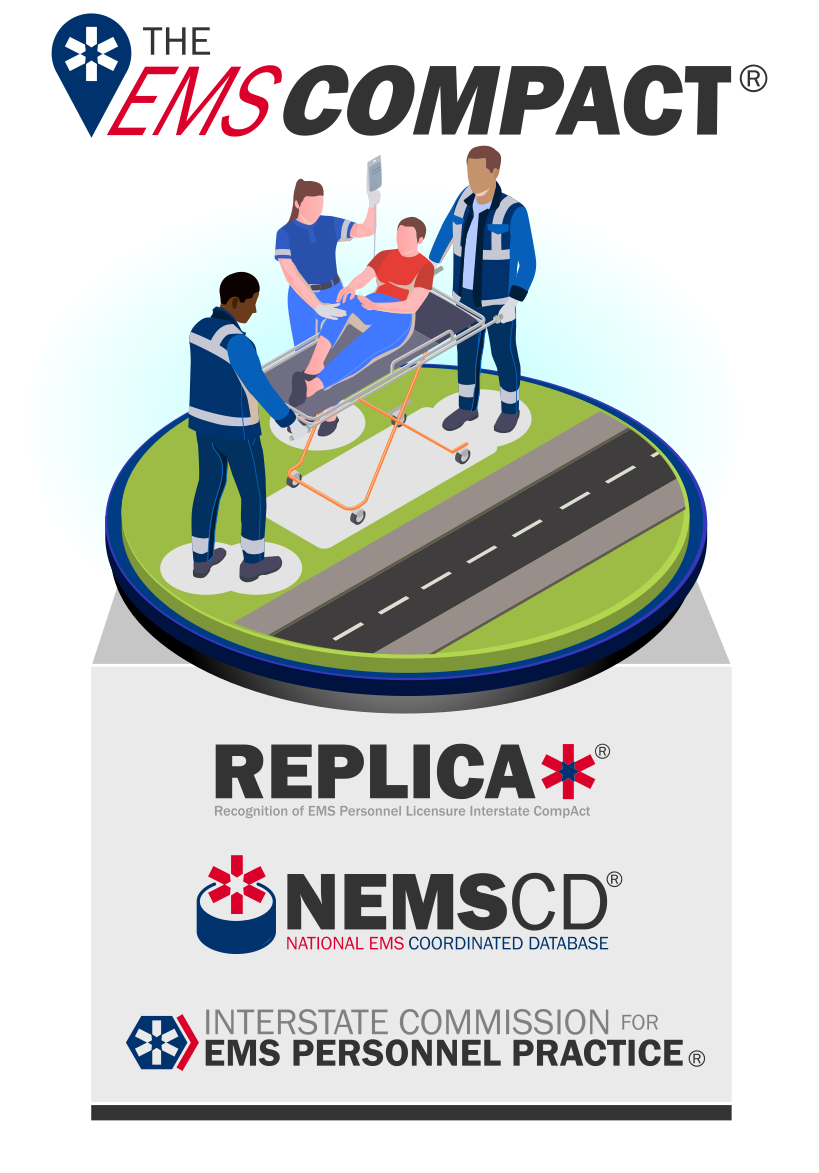
REPLICA. The legislation that authorizes the EMS Compact is titled REPLICA, the Recognition of EMS Personnel Licensure Interstate Compact. It standardizes licensure requirements for EMS clinicians, reduces barriers, expands workforce mobility, and enhances public protection. As a state-enacted law under the Compact Clause, it establishes the legal authority for mutual license recognition across state lines.
Interstate Commission for EMS Personnel Practice. The EMS Compact is governed by the Interstate Commission for EMS Personnel Practice, a multistate governmental body established by the REPLICA legislation. Each participating state appoints one Commissioner, who ensures transparent governance, stakeholder engagement, coordination, and compliance with Compact provisions.
National EMS Coordinated Database (NEMSCD). The NEMSCD tracks EMS license information and Privilege to Practice status for all participating states. It serves as the authoritative, de-duplicated database of licensed EMS clinicians nationwide.
Standardized Requirements
Participating states agree to standardized requirements for EMS clinician licensure, including:
- FBI-compliant background checks for initial licensure
- National EMS Certification (NREMT) for initial licensure
- Collaboration on multistate investigations
An Overview of the Compact
More than a decade ago, the need for consistent EMS licensure across state lines led the Department of Homeland Security and the National Association of State EMS Officials (NASEMSO) to collaborate on a solution. The REPLICA model legislation was introduced in 2014, with two states enacting it by 2015. By 2017, ten states had joined, meeting the activation threshold. The United States EMS Compact became operational on March 15, 2020, following formal Commission organization. Since then, EMS clinicians have used the Privilege to Practice to support rural staffing, pandemic response, and wildland fire deployments, demonstrating the Compact's role in modern emergency care.
Key Features
- Enhanced state cooperation. The Compact unifies state EMS laws, enabling qualified EMS clinicians to operate across participating states with minimal administrative burden. It provides states the authority to issue subpoenas and collaborate on investigations.
- Privilege to Practice. More than 480,000 EMS clinicians hold a Privilege to Practice valid across participating states at no cost.
- Governance. The Compact is managed by the Interstate Commission for EMS Personnel Practice, ensuring transparency, accountability, and standardized implementation.
- National EMS Coordinated Database. The NEMSCD serves as the only primary-source, de-duplicated registry of licensed EMS clinicians in the United States.
The EMS Compact and its Privilege to Practice provision are provided at no cost to EMS clinicians, and the Commission has not imposed fees on states or individuals.
Privilege to Practice Requirements
A Privilege to Practice is automatically activated when the following criteria are met:
- Hold a current, unrestricted EMS license (EMT, AEMT, Paramedic, or state-equivalent level) issued by a participating state.
- Be at least 18 years of age.
- Be affiliated with an EMS agency authorized in the Remote State.
- The EMS agency must operate under the supervision of a medical director.
- Participating states must recognize the Privilege to Practice when clinicians meet these criteria.
- EMS clinicians are responsible for knowing and following local laws, rules, and scope of practice requirements in each state where they operate.
No time limitation exists for the Privilege to Practice under Compact law. A qualified EMS clinician automatically receives an immediate Privilege to Practice in every other participating state. No separate application, approval, or fee is required. The privilege remains valid as long as the clinician holds an active and unrestricted license in a Home State, maintains affiliation with an EMS agency authorized in the Remote State, and is listed as active in the National EMS Coordinated Database.
Scope of Practice
- The default scope of practice is the clinician's Home State scope.
- Remote States may modify or limit that scope as permitted by state law.
EMS Agencies and Employers
- EMS agencies must comply with all rules and regulations of their operating jurisdiction.
- The United States EMS Compact governs individual EMS clinicians, not EMS agencies or employers. Agencies and vehicles remain licensed and regulated under state law.
Participating State Requirements
- Use the National Registry of EMTs (NREMT) examination for new EMT and Paramedic licensure.
- Require an FBI-compliant background check for initial licensure.
- Report adverse actions to the Commission.
EMS Clinician Discipline
- All disciplinary actions must be reported to the Coordinated Database within two business days.
- State actions are also reported to the National Practitioner Data Bank (NPDB).
Other State Laws and Rules
EMS clinicians must comply with all applicable laws and regulations in any state where they practice.
The EMS ID Number
- An EMS ID is issued free of charge to all EMS clinicians in the United States.
- Use the EMS ID to validate a Privilege to Practice status.
The Seven Legislative Declarations of the EMS Compact
The EMS Compact establishes seven legislative purposes to improve public health, professional accountability, and interstate mobility:
- Increase public access to EMS clinicians.
- Enhance the state's ability to protect public health and safety.
- Encourage cooperation among participating states in EMS licensure and regulation.
- Support licensing for separating military members and their spouses.
- Facilitate information exchange on licensure, adverse actions, and investigations.
- Promote compliance with laws governing EMS practice.
- Authorize mutual recognition of participating-state EMS licenses for accountability.
Through the United States EMS Compact, states collectively strengthen public safety, professional standards, and the ability of EMS clinicians to deliver care wherever it is needed most.
This page is for informational purposes and does not constitute legal advice.