
EMS Compact History
From a 2012 idea to a Compact enacted in 28 states: how the United States EMS Compact was built.
Work on the United States EMS Compact began in 2012 to develop a model interstate compact that would solve day-to-day challenges when EMS clinicians deploy across state boundaries. Examples include:
- EMS clinicians responding as part of an agency with a multistate footprint
- Staffing for large unplanned events that do not reach the level of a Governor's disaster declaration
- Staffing for large planned events such as concerts and races
The project drew on the proven success of other interstate compacts, such as those used for nursing and driver licensing, which allow recognition across states within clearly defined legal terms.
Why a Compact Was Needed
EMS clinician mobility is not unusual; it is an essential part of the work. An EMT or paramedic may begin care in one state and transport a patient to a hospital or trauma center in another, and EMS clinicians routinely deploy far from home to support overwhelmed systems during disasters, large events, and staffing shortages. Yet for most of the history of EMS in the United States, licensure law stopped at each state border, and even a fully qualified paramedic could not legally provide care in another state without a separate licensure process involving applications, background checks, fees, and delay.
Unlike physicians, nurses, and other health professions that developed under more consistent national models, EMS evolved on a different path. National collaboration and federal investment built early momentum, but in 1980 the withdrawal of federal funding and legislative support fractured that progress, leaving EMS to develop state by state, fragmented by default rather than by design. The EMS Compact was created to reverse that fragmentation, looking to earlier models such as the Nurse Licensure Compact and the Driver License Compact as blueprints for recognizing credentials across states without compromising state regulatory control. The Department of Homeland Security identified the absence of an EMS licensure compact as a national-security and operational risk, and a broad coalition of national EMS organizations partnered with the Council of State Governments to assess the need, engage stakeholders, draft the model legislation, and build the governing framework.
Historical Timeline
The Idea Takes Shape
The Department of Homeland Security's Office of Health Affairs and EMS leaders across the states identify the need for an interstate licensure compact so that EMS clinicians can practice across state lines during disasters and day-to-day mutual aid.
The National Advisory Panel Convenes
Meeting in January and March 2013, the National Advisory Panel brings together more than twenty national stakeholder organizations to guide early development and build a structure to protect the process.
REPLICA Model Legislation Released
The Drafting Team finalizes the Recognition of EMS Personnel Licensure Interstate Compact (REPLICA), the uniform model legislation that each state adopts to join.
The Commission's First Staff
Sue Prentiss joins as the Commission's first staff member, serving as Compact Educator to support states adopting and implementing the Compact. The role later became the Executive Director position.
The Commission Is Born
With the tenth state's enactment, the activation threshold is met. The inaugural meeting of the Interstate Commission for EMS Personnel Practice is held October 7 to 8, 2017, in Oklahoma City. Commissioners adopt bylaws, elect the first officers, and hold the first rules hearing.
5 states enact the Compact 12 total
Leadership
- Joseph Schmider, Chair
- Doug Wolfberg, JD, Chair
- Jeanne Marie Bakehouse, Vice Chair
- Stephen Wilson, Treasurer
- Andy Gienapp, Secretary
- Donna G. Tidwell, Commissioner-At-Large
3 states enact the Compact 15 total
The Coordinated Database Is Built
The National EMS Coordinated Database (NEMSCD) is built, establishing the secure infrastructure for states to verify licensure status and exchange adverse action information. It became operational on March 10, 2020.
Dan Manz Becomes Compact Educator
Dan Manz succeeds Sue Prentiss as Compact Educator on December 17, 2019, continuing the Commission's work supporting states as they adopt and implement the Compact.
2 states enact the Compact 17 total
Leadership
- Justin Romanello, Commissioner-At-Large
Privilege to Practice Activates
On March 15, 2020, the Commission activates day-to-day Privilege to Practice operations, recognizing the public benefit as EMS clinicians respond across state lines during the COVID-19 pandemic.
3 states enact the Compact 20 total
Leadership
- Donnie Woodyard, Jr., Vice Chair
- Wayne Denny, Treasurer
- Joseph House, Secretary
The First Executive Director
Ray Mollers is appointed the Commission's first Executive Director on March 1, 2021, as the role grows from Compact Educator into full executive leadership of the Commission's operations.
1 state enacts the Compact 21 total
Leadership
- Gary Brown, Commissioner-At-Large
1 state enacts the Compact 22 total
Leadership
- Donnie Woodyard, Jr., Chair
- Kraig Kinney, Vice Chair
- Aaron Rhone, Commissioner-At-Large
- Joseph Schmider, Immediate Past Chair
Donnie Woodyard, Jr. Becomes Executive Director
Donnie Woodyard, Jr. is appointed Executive Director on July 1, 2023, having previously served as a Colorado Commissioner and as Chair of the Executive Committee.
Leadership
- Kraig Kinney, Chair
- Wayne Denny, Vice Chair
- Brad Vande Lune, Treasurer
- Aaron Koehler, Commissioner-At-Large
1 state enacts the Compact 25 total
Leadership
- Mark Herrera, Secretary
States Complete Database Integration
Participating states complete full integration of their licensure data into the National EMS Coordinated Database. Indiana goes live in February 2026, and Delaware completes integration of both its EMT and paramedic licensure data, so every licensed clinician in those states holds a verified Privilege to Practice across the participating states.
Twenty-Eight States, Twenty-Seven in Force
The Compact has now been enacted in twenty-eight states and is in force in twenty-seven, representing hundreds of thousands of EMS clinicians. Connecticut has enacted the Compact but is not yet operational, and additional states are considering legislation.
Arizona Goes Live
Arizona's enactment of the Compact takes effect on September 12, 2026, and Arizona becomes the twenty-sixth state in which the Compact is in force. Gail H. Bradley, Medical Director of the Bureau of EMS and Trauma System, is seated as Arizona's Commissioner the same day, and integration with the National EMS Coordinated Database begins.
Alaska Goes Live
Alaska's enactment of the Compact takes effect on September 20, 2026, and Todd McDowell, EMS System Manager at the Alaska Department of Health, is appointed Alaska's EMS Compact Commissioner the same day. The Compact goes live in Alaska on October 9, 2026, and Alaska becomes the twenty-seventh state in which the Compact is in force.
1 state enacts the Compact, not yet in force enacted
Leadership
- Michael Johnson, Commissioner-At-Large
Phase One: The National Advisory Panel
In January and March 2013, the National Advisory Panel met to guide early Compact development and build a structure to protect the process. The Panel led policy analysis and issued recommendations, including to:
- Move forward and develop a compact that preserves state sovereignty and collective control
- Create a state-based regulatory system where national policy can be implemented and data exchanged, while remaining flexible for an evolving EMS profession
- Work closely with the Council of State Governments' National Center for Interstate Compacts
The National Advisory Panel comprised representatives from stakeholder organizations, including EMS agencies, federal partners, and the EMS industry:
- American Ambulance Association
- American College of Emergency Physicians
- Association of Air Medical Services
- Association of Critical Care Transport
- Bureau of Land Management
- EMS Labor Alliance
- Federal Bureau of Investigation
- Federation of State Medical Boards
- International Association of EMS Chiefs
- International Association of Fire Chiefs
- International Association of Fire Fighters
- International Association of Flight and Critical Care Paramedics
- National Association of EMS Educators
- National Association of EMS Physicians
- National Association of EMTs
- National EMS Management Association
- National Governors Association
- National Registry of EMTs
- National Volunteer Fire Council
- USDA Forest Service
Phase Two: The Drafting Team
The Drafting Team met in June, August, and October 2013. This national team of compact and subject-matter experts translated the Panel's guidance into uniform statutory language using a structured, time-tested process. Organizations represented included the National Association of State EMS Officials, the Council of State Governments, the Association of Air Medical Services, the International Association of Flight and Critical Care Paramedics, the International Association of Fire Fighters, the National EMS Management Association, the National Association of EMTs, and the Vedder Price law firm.
The Drafting Team developed the EMS Compact's model legislation, approved and released for consideration in June 2014. Key elements included:
- Creating a contract between states through enactment of identical legislation
- Extending a Privilege to Practice to qualified EMS clinicians from other participating states under specified conditions
- Granting participating states authority over visiting EMS clinicians while they practice in the state
- Establishing a governmental Commission to promulgate rules
- Creating a national, coordinated database for licensure and discipline
Phase Three: Education and Enactment
Activation required ten state legislatures to enact the model legislation. NASEMSO led national education and state-by-state strategies to support bill introduction, passage, and gubernatorial signature.
Phase Four: Transition to the Commission
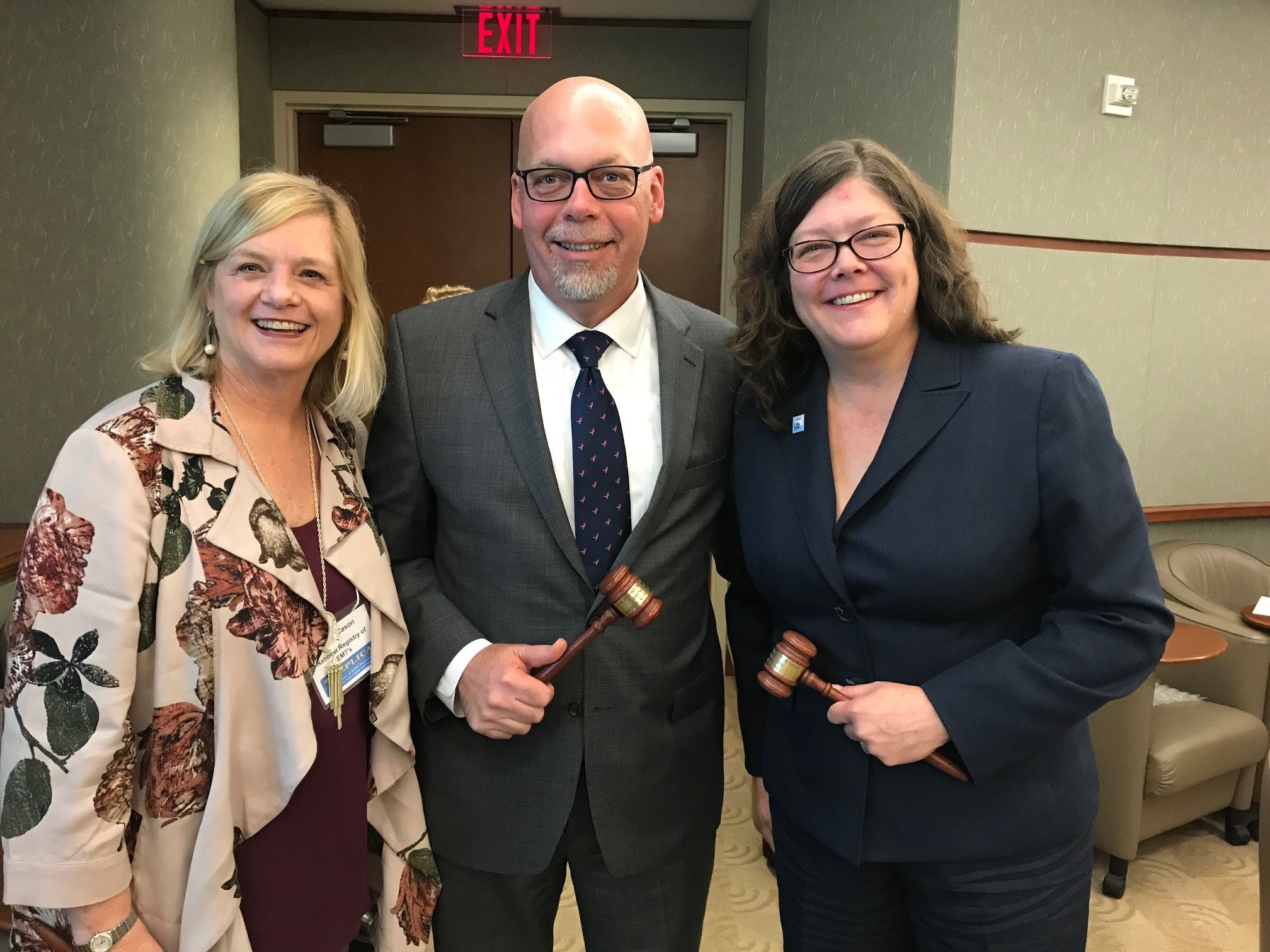
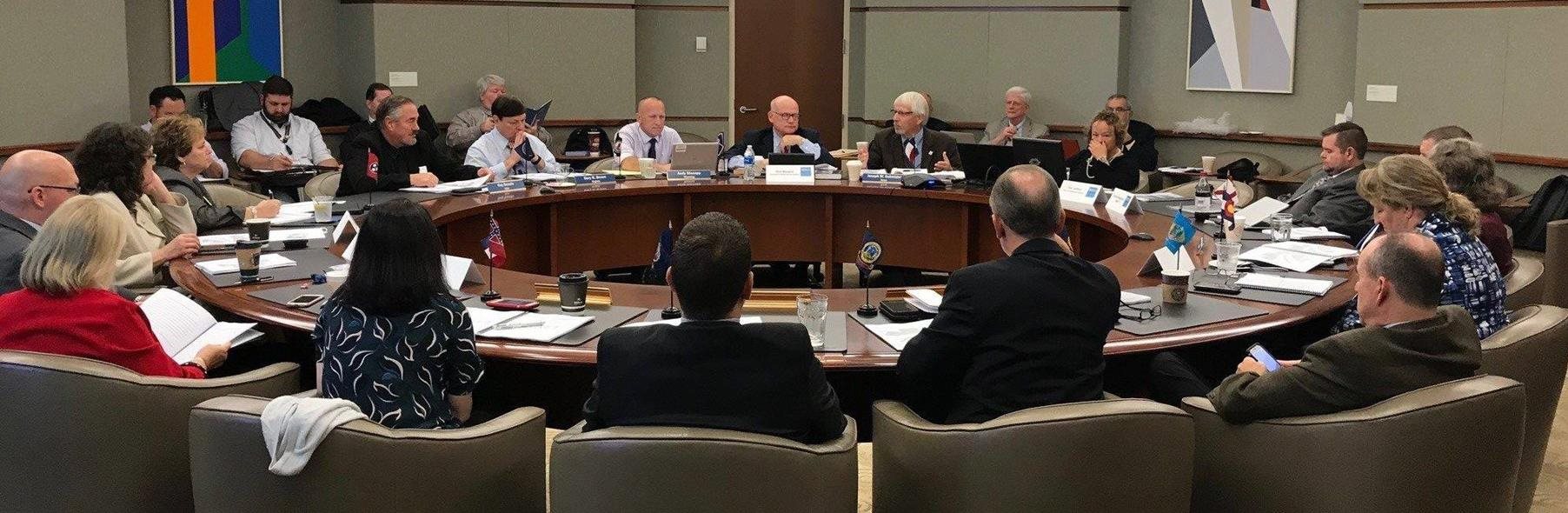
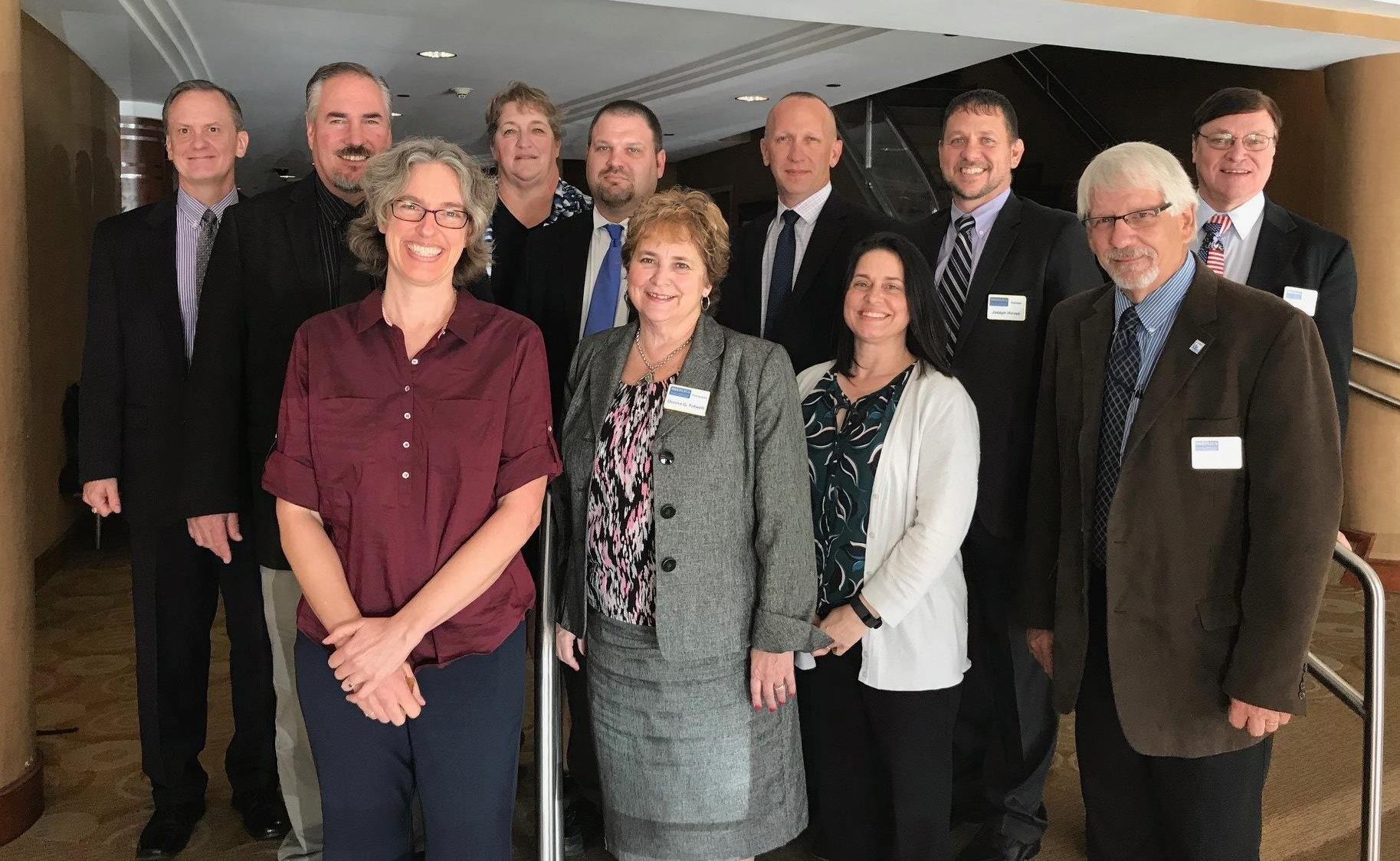
The inaugural meeting of the Interstate Commission for EMS Personnel Practice, the governing body of the EMS Compact, took place on October 7 and 8, 2017, in Oklahoma City, Oklahoma. At that meeting the inaugural Commissioners adopted bylaws, elected the Commission's first officers, and held the first rules hearing.
Attorney Doug Wolfberg, of Page, Wolfberg and Wirth, served as interim chair, presiding over the inaugural meeting until the Commission elected its first officers. Joseph Schmider of Texas was elected the Commission's first Chair. The participating states also selected three honorary chairs, who formally seated the inaugural Commissioners in the order their states enacted the Compact, each representing a national pillar of the EMS community: Debra Cason of the National Registry of EMTs, Dia Gainor of the National Association of State EMS Officials, and Rick Patrick of the Department of Homeland Security Office of Health Affairs. The Commission recognizes these inaugural honorary commissioners for their role in launching the EMS Compact.
Compact Activation
The Compact became legally operational when the tenth state enacted the model legislation in 2017. On March 15, 2020, the Commission formally activated day-to-day Privilege to Practice operations, recognizing the public benefit as EMS clinicians responded to the COVID-19 pandemic. Although the National EMS Coordinated Database was not yet fully operational, the Commission proceeded to ensure timely, lawful interstate practice.
Current Status
The EMS Compact has been enacted in 28 states and is operational in 27. Arizona became operational on September 12, 2026, and Alaska on October 9, 2026. Connecticut has enacted it but is not yet operational. See the Participating States page for the full, current list and each state's status.
This page is for informational purposes and does not constitute legal advice.